Tapped Out

Chaplaincy

I did an unthinkable thing today – I told my boss that I was “tapped out.” I didn’t have more to give.

This is a first for me, at least for as long as I can remember. “Stick-to-it-tivness” was a theme in my family. You work until the job is done. This, of course, has about killed me on several occasions. I just don’t have good boundaries. I have a terrible time saying no.

It’s not that I don’t WANT to do it (whatever “it” is) – I very often do! In fact, most times, I could do it better than it’s being done and I want to help. But, there are only so many hours in a day and I only have so much time to give.

Self-care. It’s never been a strong suite with me. I’m something of an “on or off” person. For the last ten years or so in ministry, the spiral works something like this:

Get the new job or assignment. 

Work like a mad fiend. 

Be very impressive because I just don’t ever go home. 

Get lots of kudos for my workaholism. 

Feed on the kudos and work more. 

Start to feel the burn. 

Work harder. 

Crash. Burn. Let the ball drop. Depression. 

Recover. 

Repeat. 

Now, the thing is, my career path has not helped this natural tendency in me. Since I joined the Army, I have had a change, move, PCS EVERY year! Every year, I would go through my patterned cycle and every year about the time I was at my worst (always hidden from my leadership and Soldiers through secret ninja skills I learned growing up a pastor’s kid) I could recover because I knew there was a change coming. There was a moment on it’s way that would give me an artificial shift in my circumstances and I knew that I’d be able to take some time off and recover from my woes.

Until this year.

This year has been the first time I’ve started a new OER (Annual Evaluation) in the same unit and NOT be deployed/coming back from a deployment. This has highlighted the need in my life to actually do something about my spiral. I had never identified this pattern in my life. During my year of CPE, I identified something through group work and this year, my wife and I nailed it – this pattern of exhaustion that torpedos my ministry.

So. I. Made. Change. I broke the spiral. I felt coming on and I owned it. It was the first step. I had to own that I was overwhelmed and starting to spiral downward. Then, I had to do what actually hurt: say no to programs.

Here’s the thing, when you are a minister, saying “no” not only means that you personally will not do something or give up time it also means that OTHERS will not get to have the event because you turned it down. So, as a prison chaplain, it means that my inmates will not get to have a service because I can’t handle doing it and remain healthy. That’s where it gets tough. That’s where the rub turns into a burn. Having to face your commander and your congregation and tell them that you just don’t have more to give goes against everything I have ever experienced for a Soldier AND a pastor.

I’ve heard and read a great deal about “Self-Care,” the idea that we pastors have to take care of our selves in order to properly minister. I have experienced others and myself sighing and affirming that reality. Then, we all go back to work, head into the same meetings and carry on with the business of wearing the hats of “staff officer” and “chaplain.”

Too often, the ones who pay the steepest price are the kiddos, spouses, and families of the minister. I’ve certainly done ministry on the back of my family. This last Christmas season, I made a commitment to NOT do that. This does not mean that I didn’t work on Christmas – I did – however, it DOES mean that when I am home, I am home. When I am playing with my kids, there is nothing taking me from that. When it’s my wife’s time, it’s hers and she does not have to share me with my smart phone or email.

It’s been challenging. It’s been stressful. It’s also been life-giving!

Who knew that embracing my own limitations would be so… liberating?!!
Production Burnout

Chaplaincy

Burnout.

Expectations.

Success.

Production.

I think these words mean very different things to different people. I just read this amazing article, “Soul Care and the Roots of Clergy Burnout.” Very worth reading.

Some highlights and thoughts:

“Pastors who are effective and get things done are considered “successful.” Denominations, including the United Methodist Church, focus on results that can be measured (e.g., increased membership and the congregation’s financial well-being). Yet numerous studies over the past 20 years reveal that this approach is, literally, killing clergy and, by extension, churches and denominations.”

Production is a part of who we are as Americans. What we DO defines us. It also seems to be what kills us.

January is the month that highlights this in my life. After the long work hours of November and December, January’s need for the new year productivity just beats me up. I get depressed and start to spiral into a passive-aggressive lethargy. It happens. Every. Year.

It’ll pass. I’m proactive about “refilling my tank” but it’s still exhausting. My hope lies in my knowledge that “this too shall pass.” Of course, it doesn’t help that I’m writing this at a 0400 UA, waiting in line to have my urine analyzed with the rest of my company… Production indeed.

Even still, fellow ministers, how has the need for production impacted you? It’s worth thinking about.

Relevancy. A rant. Well, sort of…

Army, Chaplaincy

Warning. There is a mid-western, moderate, reserved rant ahead.

You’ve been warned.

Apparently, I’m an old codger. Not the “Dennis the Menace Mr. Wilson yell-at-everything-he-hates” codger, just a, “I’m not sure how relevant I am and how relevant I need to be” codger.

I try to keep up with what my faith (Christianity) is doing, what is popular, what is moving – call it a professional awareness. Mostly, it’s discouraging. Clearly, I’m not very relevant and am not a part of main stream. Of course, reading “Christianity Today” and “Relevant” magazines as well as a host of blogs and websites might not actually be the clearest of pictures but at least I’m giving it a shot.

Christianity Today tells me I am not nearly conservative enough.

Relevant tells me I am not nearly cool enough.

“But, but” I sputter, “but I’m only 33! (soon to be 34 so, if you want to say happy birthday, I’ll take that…) I read. ALOT. My influences are people like NT Wright, Rob Bell, Greg Boyd, Mclaren, Compolo, Tickle… those people! I’m surrounded by the 18-24 age group. I’m daily getting blasted by cultural references I don’t get and literally have to google just to know what’s going on! I use google as a verb! I sometimes watch tv shows for the very purpose of being able to know what people are talking about. I vote *progressively*. I’m so down with change. Resiliency is my middle name. I’m up for whatever works. Pragmatic…..

Why do I feel so uncool when I read “Relevant?”

Maybe its my church. I’m a chaplain. My congregation changes. I have two at the moment. One is a congregation of 50 or so inmates at a military prison. Actually, I consider myself the pastor to them all but weekly, services range between 40-55 (out of 200+) on a regular basis. So, after writing that, I’ll own the 40 number. My other congregation is the Liturgical Service on Ft. Leavenworth. We meet in a historic chapel that literally has memorial markers (ok, they are like gravestones attached to the wall) surrounding the pews. We use the old Lutheran Book of Worship, setting Two for the service. I preach through the Revised Common Lectionary. Maybe that’s it. Maybe it’s all the old school stuff.

Problem is. I like it. In fact, I really like it. It feeds me. It feeds my closeness to God. I feel more at home in that setting then the last time I was at Mars Hill (though I really like the podcast).

Maybe it’s that I wear a clerical collar on Sundays. I would wear it daily but really, in the Army, it’s a weekend thing. My uniform throughout the week has a cross on it highlighting my role as chaplain, pastor. I didn’t grow up with the clerical collar, I certainly didn’t experience that in my clerical training but here I am anyway. Of course, the business suit is as much clerical garb in my experience as the collar is in my current ministry. Maybe its the Army. Because of my uniform, I am accustomed to people recognizing me as clergy and therefore, I might be (in a neurotic sort of way) in need of that even on the weekends. Hmm. I’ll look into that. Either way, for all my progressive tendencies, I find myself actually quite conservative when it comes to worship, preaching, teaching etc. My style keeps getting more old school.

I should probably chalk it up to my need to be a contrarian. Whatever is cool and hip I find myself emphatically NOT wanting to do. So, I suppose, if what I’m doing became the hip thing, than I would probably start wearing slim-fit suits.

What is relevancy anyway?

Last Sunday, I preached about Colossians 3:12-17. It’s all about wearing the love of Christ. It’s the Church at it’s best. It’s about NOT wearing our pride, violence, anger, and consumption and instead being very intentional about wearing compassion, kindness, humility, and patience. It’s about forgiveness.

I think that’s relevant. It’s always relevant.

When I became a chaplain in the Army, I was very taken with getting to the “hooah schools” where I would get badges and tabs to wear on my uniform highlighting how awesome I was as a Soldier. I was consumed with it actually. I, very much, attached worth and honor to those external symbols of achievement in the Army. I grew out of it. Now, I’m not sure I want to even do those schools – I’d have to really up my physical training and who wants to do that – I also understand that, as cool as those symbols are (and they are cool), they are not the marks of a Chaplain, the are the marks of a Soldier.

A retiring chaplain said to my CHOBC class, “when it hits the fan, when people are dying and suffering, they do not call for an Airborne Ranger, they call for you. Chaplain. Servant of God.” That’s relevancy.

I think I’ll just keep putting on love every day. I’ll keep being intentional about being vulnerable and as authentic as I can. It’ll keep my humble. It’ll keep me authentic. It’ll keep me relevant I think.

Hindu Army Chaplain

Army, Chaplaincy

In this world of changing times and culture, I love how this video highlights how there are no boxes. The Army Chaplaincy does have many evangelical protestants but it also has a Hindu Chaplain. The Army has always been a micorcasm of the greater society and the chaplaincy is a microcasm of the greater clerical world. Religion exists in the same marketplace that everything does in this country. Thats what the “free exercise of religion” is all about.

Veteran’s Day – then and now…

Army, Chaplaincy

I have some angst about Veterans Day. It’s the same midwestern angst I have about being too excited about anything. I don’t like the feeling that I am not differentiated from my religion, my faith, my job, and my country, politics etc… I have an aspirational image of myself that I am a little above trappings, pomp and circumstance of the life I lead.

Veteran’s Day is no exception.

I’m fine celabrating the service of others but being a veteran is sometimes a little sureal to me. I’m so used to this life and have more or less forgotten what life was like before putting on the uniform that considering myself in this slice of our population is something of an odd thought. I get up, I go to work, I get paid, I serve people and, oh right, my country.

Maybe it’s this job. Yesterday, I preached in both prison facilities in which I work. In one, I am their chaplain, their pastor – the inmates are all veterans themselves but have been put out of service because of their convictions in courts martial. Ministering to them in humility and being proud of my own service carries no small tension in my mind.

So today, I celebrate a deployment from what seems long ago. Operation Iraqi Freedom III. Camp Striker, Iraq. 2/121 Infantry Battalion (Mechanized). A year that changed me at my core. A young, idealistic, hurting young chaplain met with a nervous, driven Infantry battalion and grew together into a hardened combat team, taking the fight to the enemy.

I think of that year now with no small amount of emotion. Those that died. Those that lived. The wounded, those who continue to be wounded. We were, all of us, changed by that war.

Psycho Clergy

Chaplaincy, Theology

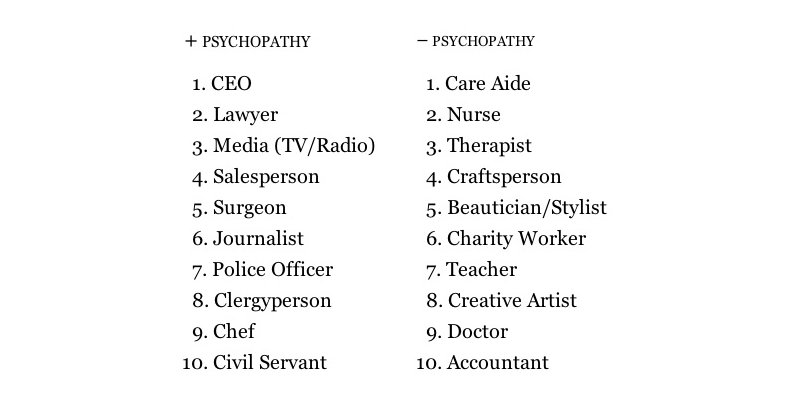
I just read this great article on which careers have the most psychopaths – turns out, number eight on the list is clergy.

yup. Clergy =  Pastors. Deacons. Bishops. Regional Ministers. Chaplains.

We (clergy) tend toward a personality disorder described as “having shallow emotions, reduced fear, stress tolerance, lacking empathy, cold heartedness, egocentricity, superficial charm, manipulativeness, irresponsibility, impulsivity, anti-social behavior and lacking guilt.”

So… there’s that.

Now, before we jump to the defensive and say that this is categorically false, clergy do not belong on that list… etc. etc. Remember that I’m probably not talking about you or your pastor per se but the greater comment on who might experience a call to ministry. One thing I had to come to grips with when doing my CPE work was just why I felt called in the first place. We, as ministers, understandably feel that our calling was directly from God but I would humbly submit that there might be some baggage connected to that calling which is very much with us. It is that baggage, working in the background that makes our calling so difficult to work with. Nietzsche wrote of the “will to power” – the idea that we all have in us the desire to have power over another. Are ministers any different? Our desire to help and serve might be present but so also might desires to know, have power, make decisions in people’s lives. The possibility for a positive trait exists with the possibility for a negative one.

What about Jesus’ words in Mark 12:38 As he taught, Jesus said, “Watch out for the teachers of the law. They like to walk around in flowing robes and be greeted with respect in the marketplaces, 39 and have the most important seats in the synagogues and the places of honor at banquets. 40 They devour widows’ houses and for a show make lengthy prayers. These men will be punished most severely.” – These are ministers. Charged with the care of the community and they clearly do not do it. Were ALL teachers of the law this way? Is Jesus being fair to the ENTIRE cadre of religious leaders in Israel? I don’t think so. Perhaps Mark is remembering his own bias a bit here but the point is made. There is power, position, strength, and wealth in the ministry in ancient Israel. I think that has pretty much been a standard throughout the ages. Where there is some power, there will be those that, for whatever altruistic reason started the journey, will abuse it.

We all know the stories and have experienced people who should have been ministering to us but instead used our grief to flex their own power however great or small. This is the dark side of ministry. When power gets mixed up with service, people get hurt.

The question we clergy should be asking is: how do we exercise spiritual authority and not let it become an abuse of power feeding our own ego?

Driven out but going back in

Chaplaincy, Theology

Keep the earth below my feet

For all my sweat, my blood runs weak

Let me learn from where I have been

Keep my eyes to serve and hands to learn

Keep my eyes to serve and hands to learn

– “Below My Feet” Mumford and Sons

An inmate got under my skin yesterday. I walked away frustrated, angry, and hurt. I didn’t deserve the triad he laid on me. This sort of thing used to happen quite a bit. When I first started at the Facility, I was constantly walking away hurt and angry but then, over time, I began to recognize that their anger was not about me but about the bigger world. I have been able to differentiate between what is theirs, mine, and the governments. 

So what happened yesterday?

I let my guard down. I forgot that no matter how friendly and kind I am with the inmates, no matter how many needs I meet or services that I oversee, I am the enemy. 

It was a reminder that I didn’t want but, in fact, needed. 

There is no education like adversity.” Benjamin Disraeli 

The real test will be whether or not I can go back in there today, maintain my professionalism, give great pastoral care, listen and lay aside my anger to be a pastor again. This is the calling of the chaplain, being able to lay aside “your stuff” in order to minister. It’s not the explosion avoidance in the moment that is the test of character, it’s the going back in the next day that defines.

Suicide Stand Down

Army, Chaplaincy, Peace

“Essentially, we know what leads people to suicide — it’s stress,” Varney said. “What we don’t know is who has the ability to relieve that stress.”

This quote from an article about how Ft. Campbell, KY is actually gaining in the Army’s fight against suicide highlights the essential quandary facing our force today – how do you help a population who is living out the most stress and danger in society? It’s stress leading to the action and stress is a part of the job.

It’s tough being a chaplain in this Army sometimes. Its hard to spend great amounts of your day working with at risk individuals and then still feel like your losing the battle.

It takes prayer. Lots of it. I ask for it for our Army.

Today was suicide stand down day. Across the Army Chaplains, Commanders and other care givers stopped what operations they could (mission still needs to be done) and talked about suicide. I’m certain there are many reasons for what we are going through as an Army today not the least of which is the cost of being at war for so long. I believe that we are moving in the right direction though and have great hope that as we continue to face the dark side of problems, we’ll save even more lives.

Peace be with you.

SES = CPE Supervisor Training

Army, Chaplaincy, Theology

I’m finishing up my packet for SES training.

If that sentence sounded too Army to be understood, then hooah. (to be interpreted, I get it) What that means is this – any time a person is making a move in the Army, wanting to advance their career by getting some further education or “going to school” etc – they “put in a packet.” Every packet is different, mostly it’s a compilation of your military record, sometimes it’ll include your civilian school records and whatever else the board might be looking for.

SES is the school for CPE Supervisors. If you want to become a CPE Supervisor in the Army, you need to put together a packet, go before a board made up of Army CPE Supervisors, get invited into the program and then later go through a board of civilian CPE supervisors who *might* declare you ready to become a candidate. Then, over the course of several years, you continue going before committees of civilian supervisors who will evaluate your learning and decide if you are ready for the Associate Supervisor Board. If they deem you ready, then you are in. You are Made. You become an ACPE Associate Supervisor and are able to run a CPE center. After this, you have one more board and you become a Full Supervisor. (Click here if you are wondering just what Clinical Pastoral Education is all about)

This packet I am doing is literally the gateway to a gateway.

At this point, I have the three papers done and just need to finish my Verbatim and it’ll be presentable. At least, I hope so…

Why do this? Why go through all this pain just to be told (I am certain) that I am an interesting candidate and to keep trying, there might be a place for me in the future? I have asked myself that question many times in the last couple months as I’ve worked through my personal biography, my understanding of the CPE process, my theology, and educational viewpoint as well as my strengths/weaknesses and motivation to enter SES training.

I believe I’m called. I believe that a calling is where my talents/gifting/desire meet a need that exists in the world. I love teaching. I miss the classroom. I really enjoy the groups I’ve been able to facilitate in the Prison. I am using the metaphor of the “Wilderness Guide” as my educational model. The guide knows the terrain. They are familiar with how to survive in the wilderness. They know the safeties to use and the way back should the group get lost. They can read the compass. They are also a teacher, delighted in experiencing new things. They love it when the group discovers what they have seen for the first time.

In the context of leading a group, I came to this while working through grief and loss with some inmates: I am familiar with the terrain of suffering. I know pain. I know loss and am “acquainted with grief.” I also know safety and can identify when someone needs a break or might be about to share something inappropriate for the setting. I am learning when to “come up for air” and when to “dig deeper.” Moreover, I delight in learning. I love to experience when someone discovers something new about themselves for the first time. When the room goes from being a classroom filled with suffering, struggling humans to a sacred space where God is present, active, and alive; working in the moment in the lives of my fellow travelers. This is how I know I need to do this work.

This, I believe, is the calling that will get me through the next few years – and that’s what it’ll take to just get into the program!!

Two views on the repeal of DADT

Army, Chaplaincy

In the wake of the study that highlighted that the repeal of DADT has had no real impact on the military, I thought I’d share a couple of articles from chaplain’s groups (both sides of the debate) that express how they feel about it.

My own thought is: does the loss of the preferential treatment of my faith (Christianity) equate to the loss of my own religious freedom?

My answer is of course: no. It is true that America is a traditionally Protestant Christian nation and thus most of it’s chaplains are, military chapels are based on Christian churches etc. etc. However, as we become more religiously diverse (as reflecting the diversity of the nation as a whole), it only highlights how great our system is when those from other faith groups and expressions can express as we do.

Is religious support fair? Is it just? Are the ideas, rituals, tenets of your faith still able to be expressed? These are the questions we need to ask.

First, a response from the conservative “Chaplain’s Alliance:”

“This list of problems and incidents that have arisen mere months after this administration imposed its will on the armed forces is disturbing to say the least, and we know it is only the beginning,” said Crews. “Compounding the outrage, service members are not free to speak out about these matters. This ensures that distrust in the ranks will increase and morale will decrease as the number of silenced victims grows.”

The Chaplain Alliance for Religious Liberty said it has worked with members of Congress to enact legislation to protect freedom of conscience for chaplains and those they serve. The proposal has passed the House of Representatives but is awaiting action in the Senate.

The second from a progressive chaplains’ group run by the UCC:

Will religious conservatives in the military no longer be able to practice their religion? Will their chaplains have to refrain from preaching against homosexuality (their term, not mine)? Not at all. Chaplains have always had the right to preach according to the tenets of the religious bodies that endorse them — and they still will. Will anti-gay chaplains be forced to conduct same-sex weddings in military chapels? Of course not. They will continue to conduct rites and sacraments as allowed by their religious bodies. And the same principle applies to conducting religious education and pastoral counseling. The one thing that every chaplain is required to do, regardless of their religious perspectives, is care for everyone. If these chaplains can’t minister to gay and lesbian service members themselves, they are obligated to refer them to another chaplain who can.
So where is the threat to religious freedom? And where could their right to free speech be limited? It will no longer be acceptable to speak about fellow gay and lesbian service members in demeaning ways in the workplace and other public settings. The fact that this has ever been acceptable by anyone anywhere, but especially by chaplains, is regrettable. And chaplains from the religious groups who are now demanding protection from discrimination have been some of the worst offenders. They, and others who agree with them, may continue to think and believe what they want, but outside of those areas where their religious speech is protected, they may now have to keep their bigotry to themselves.
I agree that religious freedom is a precious right that we must hold inviolate. It is a right that all service members serve to defend, and which all should be able to enjoy. By all, I mean those who are religiously liberal as well as those who are conservative, and by those who are gay as well as straight. Are ADF and the religious groups they represent as willing to defend the same rights and protections for others they claim for themselves? Are they as willing to acknowledge the right of chaplains from gay-friendly denominations to perform gay weddings in military chapels? And are they as willing to speak up for those who suffer discrimination because they are gay? If not, their pleas for special protection from discrimination for themselves are self-serving and unworthy of consideration.

This highlights the reality that Christian’s have always struggled through – how do we work out our understanding of Jesus’ teachings? How do we walk as salt and light? I am convinced that both these groups claim salvation through the grace of Jesus Christ and his salvific work on the cross. Yet they come down hard on both sides of the issue.

Such is the way of families. I just hope it doesn’t ruin the family reunion.